Category: Grow Guides

Grow Guides is your trusted resource for indoor growing advice, hydroponic systems, lighting, ventilation, and plant nutrition. Designed for growers in Glasgow and beyond, our guides provide practical tips and expert insights to help you grow with confidence.

  • Indoor Growing & Hydroponics Beginner Guide

    Indoor growing allows you to control light, temperature, humidity, and nutrients to create the ideal environment for plant growth. Whether you are setting up your first grow tent or improving an existing system, understanding the fundamentals of hydroponics and indoor growing will dramatically improve your results.

    This guide covers the essential equipment and environmental factors every indoor grower should understand.

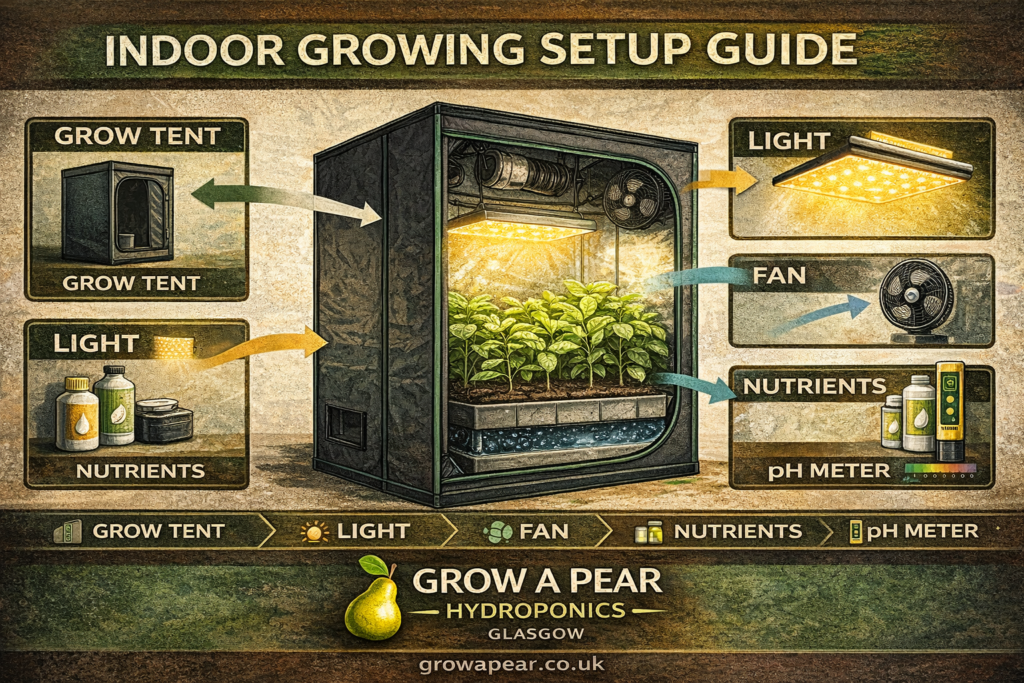
    Indoor growing setup guide showing grow tent lighting ventilation and nutrients

    Grow Tents

    Grow tents create a controlled environment where light, temperature, and humidity can be managed effectively. They also help maximize light efficiency and keep your growing area organized.

    Common grow tent sizes include:

    • 2×2 tents
    • 3×3 tents
    • 4×4 tents
    • 5×5 tents

    Choosing the right size depends on your available space and the number of plants you plan to grow.

    Related guide: How to Set Up Your First Grow Tent

    Grow Lights

    Lighting is one of the most important parts of indoor growing. Grow lights replace sunlight and allow plants to grow indoors throughout the year.

    Common lighting options include:

    • LED grow lights
    • High Pressure Sodium (HPS) lights
    • Metal Halide lights

    Each lighting system has advantages depending on the grow setup and stage of plant growth.

    Related guide: How Far Should Grow Lights Be From Plants?

    Ventilation & Airflow

    Proper ventilation helps remove excess heat and humidity from your grow tent while bringing in fresh air for plants.

    A typical ventilation system includes:

    • Extraction fan
    • Carbon filter
    • Ducting
    • Oscillating circulation fans

    Without proper airflow, temperatures can rise quickly and humidity levels can become unstable.

    Related guide: How to Choose the Right Extraction Fan

    Temperature

    Temperature affects plant growth, metabolism, and nutrient absorption. Maintaining the correct temperature range will help plants grow faster and remain healthy.

    Most indoor plants grow best between:

    20–28°C depending on growth stage.

    Related guide: How to Lower the Temperature in a Grow Tent

    Humidity

    Humidity levels change depending on the stage of plant growth. Controlling humidity helps prevent mold and improves plant health.

    Typical humidity ranges include:

    • Seedlings: 65–75%
    • Vegetative stage: 50–70%
    • Flowering stage: 40–50%

    Related guide: What Humidity Should My Grow Tent Be?

    Nutrients

    Plants require nutrients to grow properly in hydroponic systems and indoor gardens. Nutrient solutions supply the essential minerals plants need to thrive.

    Growers typically choose between:

    • Organic nutrients
    • Mineral-based nutrients

    Related guide: What Are the Best Nutrients to Use?

    pH Levels

    pH levels determine how easily plants absorb nutrients from their growing medium. If the pH is outside the ideal range, plants may experience nutrient lockout.

    Most indoor growers aim for a nutrient solution pH between:

    5.5 – 6.2

    Related guide: What Should My pH Be?

    Getting Started with Indoor Growing

    If you’re new to indoor growing, the easiest way to start is with a complete grow tent setup that includes proper lighting, ventilation, and nutrients.

    The team at Grow a Pear Hydroponics in Glasgow can help you choose the right equipment and answer any questions about indoor growing setups.

    Visit our store in Kinning Park or check out our sister store The Grow Shop, Glasgow’s largest hydroponics warehouse.

    Explore more guides: Indoor Growing Guides
  • Best Hydroponics Store in Glasgow | Grow a Pear Hydroponics

    Grow a Pear Hydroponics store in Glasgow offering hydroponic equipment grow lights nutrients and indoor growing supplies
    Grow a Pear Hydroponics in Glasgow offers indoor growing equipment including grow lights, nutrients, ventilation systems and hydroponic supplies.

    If you’re looking for a reliable hydroponics store in Glasgow, Grow a Pear Hydroponics is one of the city’s go-to destinations for indoor growing equipment, nutrients, and expert advice.

    Located in Kinning Park, Grow a Pear provides everything growers need to build and maintain a successful indoor grow setup.

    What You Can Find at Grow a Pear

    Growers visiting our store can find a wide range of hydroponics equipment including:

    • grow tents
    • LED and HPS lighting systems
    • nutrients and additives
    • extraction fans and carbon filters
    • pH meters and testing equipment
    • hydroponic systems and accessories

    Whether you’re setting up your first grow tent or upgrading your existing equipment, our team can help you choose the right setup for your space.

    Visit Our Glasgow Store

    Grow a Pear Hydroponics
    78 Stanley Street
    Kinning Park
    Glasgow

    We are open seven days a week and our team is always happy to help answer questions about indoor growing setups.

    For larger stock availability, you can also visit our sister store The Grow Shop, Glasgow’s largest hydroponics warehouse.

  • Where to Buy Grow Tents in Glasgow

    Grow tents available in Glasgow at Grow a Pear Hydroponics store with indoor growing equipment and hydroponic supplies
    Looking for grow tents in Glasgow? Visit Grow a Pear Hydroponics for quality grow tents, lighting, nutrients and indoor growing equipment.

    If you’re looking to buy a grow tent in Glasgow, Grow a Pear Hydroponics offers a wide selection of grow tents designed for indoor growing setups of all sizes.

    Grow tents create a controlled environment that helps regulate light, temperature, and airflow — making them essential for indoor growers.

    Choosing the Right Grow Tent

    The right grow tent depends on your available space and growing goals.

    Common sizes include:

    2×2 tents – ideal for beginners
    3×3 tents – small home grows
    4×4 tents – most popular size
    5×5 tents – larger indoor setups

    At Grow a Pear Hydroponics, we stock a range of grow tents along with the lighting, ventilation, and accessories needed to build a complete system.

    Expert Advice for Growers

    Our team can help you choose:

    • the correct grow tent size
    • the right grow lights
    • proper ventilation equipment

    Visit our Glasgow location to see our grow tent selection in person.

  • Hydroponics Equipment in Glasgow | Grow a Pear

    Hydroponics equipment available in Glasgow at Grow a Pear including grow tents LED grow lights ventilation systems and nutrients
    Hydroponics equipment available in Glasgow at Grow a Pear including grow tents LED grow lights ventilation systems and nutrients

    Finding high-quality hydroponics equipment in Glasgow is easy with Grow a Pear Hydroponics.

    We provide a full range of equipment for indoor growing setups, from beginner starter kits to advanced grow room systems.

    Our Hydroponics Equipment Includes

    Growers can find equipment such as:

    • hydroponic systems
    • grow lights
    • grow tents
    • nutrients and additives
    • ventilation equipment
    • timers and environmental controls

    Having the right equipment ensures plants grow in a stable environment with the proper light, airflow, and nutrients.

    Glasgow’s Largest Hydroponics Warehouse

    In addition to Grow a Pear, our sister store The Grow Shop offers one of the largest hydroponics inventories in Glasgow.

    Between both locations, growers can access everything needed to build a professional indoor growing setup.

  • What Should My pH Be for Indoor Growing?

    One of the most important factors in indoor growing is maintaining the correct pH level in your nutrient solution.

    Even if you are using high-quality nutrients, your plants may struggle to absorb them if the pH is outside the proper range.

    So what pH should your feed be?

    Recommended pH Range

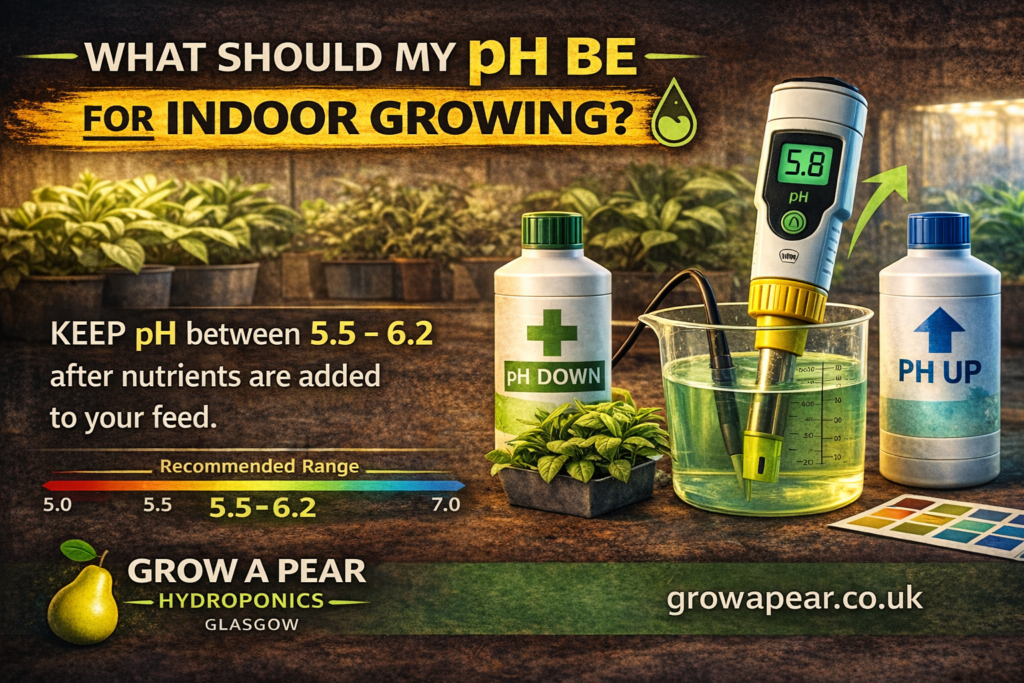
    In most indoor growing setups, the ideal pH range is:

    5.5 – 6.2

    This range allows plants to properly absorb essential nutrients from the solution.

    The exact pH may vary slightly depending on the growing medium and nutrients being used, but staying within this range will work well for most hydroponic or indoor growing systems.

    Always Check pH After Adding Nutrients

    One important thing many beginners miss is that you should always check and adjust pH after adding nutrients to your water.

    Nutrients can change the acidity of your solution, so the correct process is:

    1. Add water to your reservoir or container
    2. Mix in your nutrients according to the feeding schedule
    3. Measure the pH
    4. Adjust if necessary using pH up or pH down

    Testing the pH before adding nutrients can give an inaccurate reading.

    Why pH Matters

    If pH levels move too far outside the ideal range, plants can experience nutrient lockout. This means the nutrients are present in the solution but the plant cannot absorb them.

    This can lead to symptoms like:

    • Yellowing leaves
    • Slow growth
    • Nutrient deficiencies
    • Reduced yields

    Keeping your pH stable helps plants absorb nutrients efficiently and maintain healthy growth.

    Tools for Monitoring pH

    Most indoor growers use either:

    • Digital pH meters
    • pH test kits
    • pH control solutions (pH Up / pH Down)

    Regular testing ensures your nutrient solution stays in the correct range throughout the grow cycle.

    Need Help Dialing In Your Grow Setup?

    If you’re unsure about pH levels or nutrient mixing, the team at Grow a Pear Hydroponics in Kinning Park can help you get your setup dialed in.

    We stock pH meters, testing kits, nutrients, and full hydroponic systems to help growers maintain the ideal environment for their plants.

    For expanded inventory and warehouse stock, you can also visit our sister store, The Grow Shop, Glasgow’s largest hydroponics warehouse.

  • What Are the Best Nutrients for Indoor Growing?

    One of the most common questions new growers ask is: what are the best nutrients to use?

    The answer depends largely on your goals and growing style. Most indoor growers choose between organic nutrients and mineral (synthetic) nutrients, and each approach has its own advantages.

    Organic Nutrients

    Organic nutrients are derived from natural sources such as plant matter, compost, and organic minerals.

    Many growers prefer organic nutrient systems because they often produce better flavour, aroma, and overall plant quality. The slower nutrient release can also create a more natural growing environment.

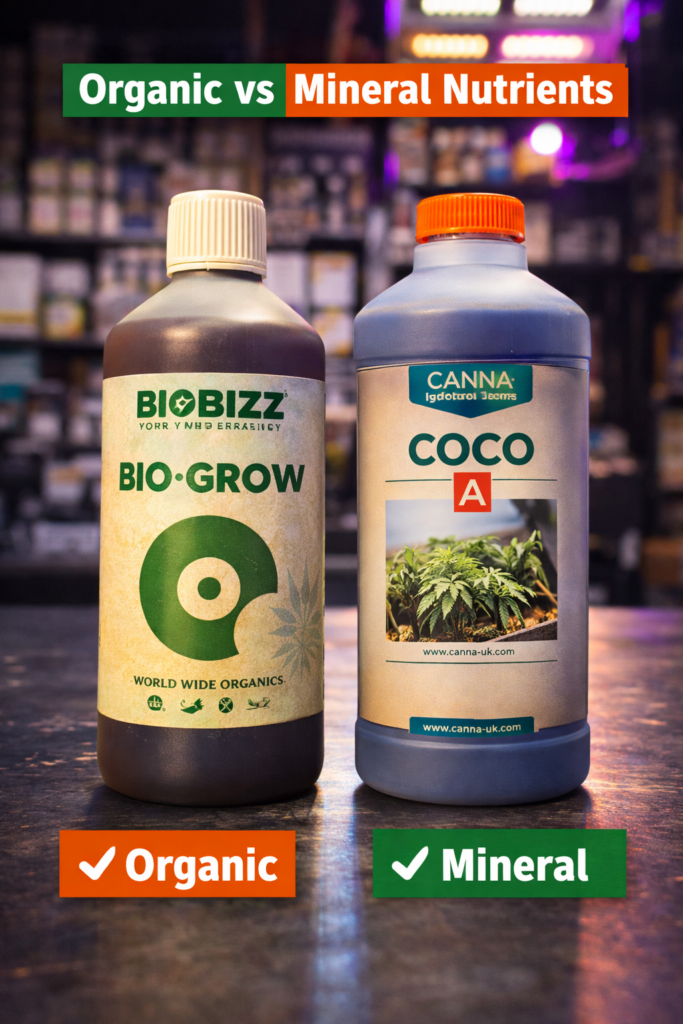
    comparison of organic and mineral nutrients used for indoor growing and hydroponic plants
    Organic vs mineral nutrients for indoor growing. Organic nutrients often produce better flavour, while mineral nutrients typically produce higher yields.

    However, organic nutrients may sometimes produce slightly lower yields compared to mineral nutrient systems.

    Mineral (Synthetic) Nutrients

    Mineral-based nutrients are formulated using purified mineral salts that deliver nutrients directly to the plant’s root system.

    Because these nutrients are immediately available to the plant, growers often see faster growth and higher yields. This is why many commercial growers prefer mineral-based nutrient systems.

    The trade-off is that some growers feel mineral nutrients can produce slightly less flavour or terpene expression compared to organic growing methods.

    Which Nutrients Should You Choose?

    There is no single “best” nutrient system — it depends on what you value most:

    • Organic nutrients → better flavour and quality
    • Mineral nutrients → faster growth and larger yields

    Many experienced growers experiment with both systems to find the balance that works best for their setup.

    Need Help Choosing the Right Nutrients?

    If you’re not sure which nutrient system will work best for your grow setup, the team at Grow a Pear in Kinning Park can help.

    We stock a wide range of hydroponic nutrients, organic nutrients, and mineral-based grow formulas, and our staff can help you choose the right system for your plants.

    You can also find expanded stock and warehouse inventory at our sister store, The Grow Shop, Glasgow’s largest hydroponics warehouse.

  • How Often Should You Change Grow Light Bulbs?

    Grow light bulbs don’t last forever. Even if they’re still turning on, their light intensity gradually decreases over time — and that can reduce plant growth and yield.

    So how often should you replace your grow light bulbs? It depends on the type of bulb you’re using.

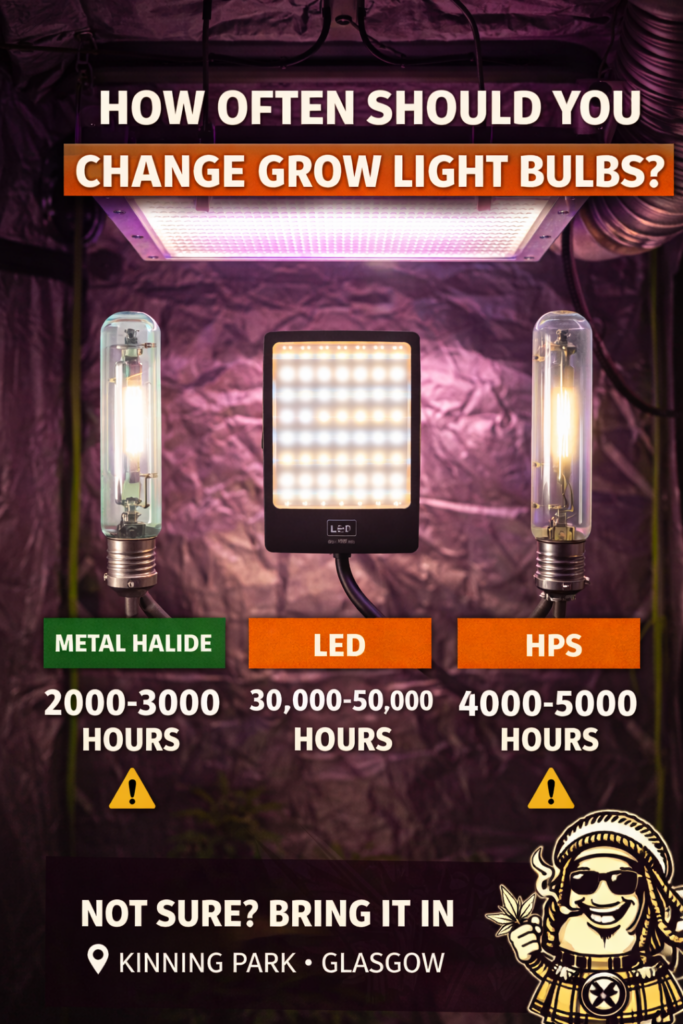
    Grow light bulb lifespan comparison showing LED, HPS, and metal halide grow lights.
    Metal halide bulbs typically last 2,000–3,000 hours, while HPS bulbs last around 4,000–5,000 hours.

    Dual Spectrum Grow Bulbs

    If you use a dual spectrum bulb from seed to harvest, it’s recommended to replace it every 3 to 4 growing cycles.

    Over time, the light output degrades even if the bulb still works. This drop in intensity can reduce flowering performance and overall yield.

    Metal Halide (MH) Bulbs

    Metal Halide grow bulbs typically last 2,000–3,000 hours.

    Light output starts declining before complete failure. Many growers replace MH bulbs closer to the lower end of that range to maintain strong vegetative growth.

    High Pressure Sodium (HPS) Bulbs

    HPS grow bulbs generally last 4,000–5,000 hours.

    Although they may still illuminate after that period, light intensity drops significantly. Reduced PAR output during flowering can directly impact yield size and density.

    Signs Your Grow Light Bulb Needs Replacing

    • Slower plant growth
    • Reduced flower density
    • Color shift in the light
    • Noticeable drop in brightness

    Need Replacement Bulbs in Glasgow?

    If you’re unsure whether your grow light needs replacing, visit:

    Grow a Pear Hydroponics
    78 Stanley Street, Kinning Park, Glasgow
    Phone: +44 141 429 5008

    The Grow Shop
    Unit 8, Block 8 Spiersbridge Terrace, Glasgow G46 8JH
    Phone: +44 141 737 0377

  • How to Lower the Temperature in a Grow Tent or Grow Room

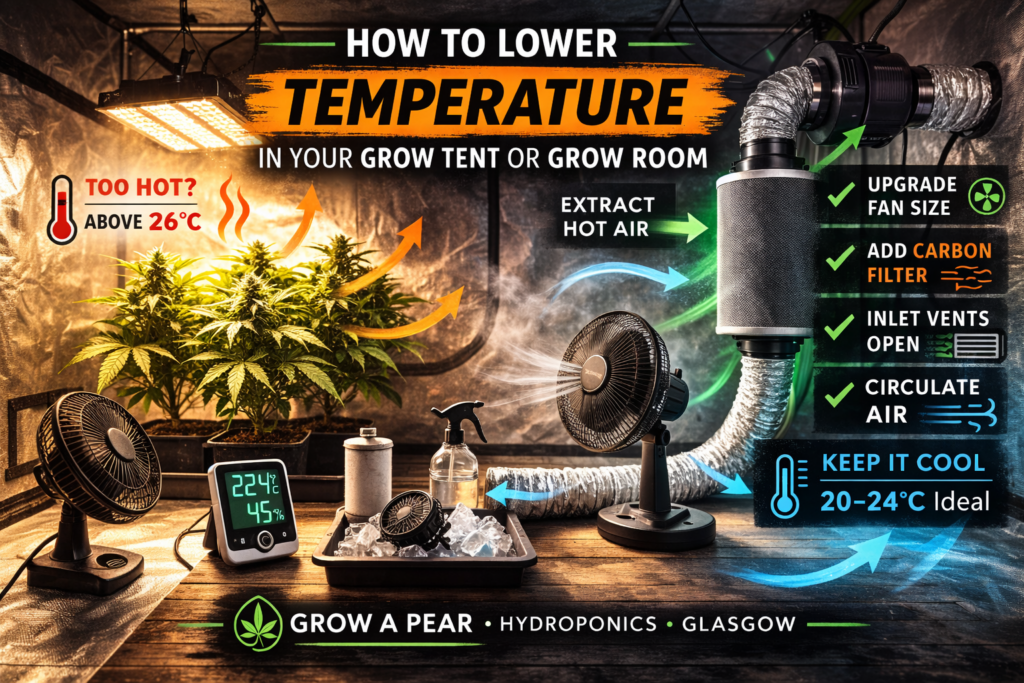
    Methods for lowering temperature in a grow tent using ventilation fans and airflow.
    Proper ventilation, airflow, and lighting adjustments can significantly reduce grow tent temperatures.

    If your grow tent or grow room is running too hot, you’re not alone. High temperatures can slow plant growth, reduce yields, and create humidity problems.

    The good news? Most temperature issues can be fixed with proper airflow, lighting adjustments, and environmental control. Below is a practical guide to reducing grow tent temperatures effectively.

    Why Grow Tent Temperatures Get Too High

    Grow spaces overheat for a few common reasons:

    • Incorrect fan sizing
    • Poor airflow circulation
    • Lights producing too much heat
    • Ballasts placed inside the tent
    • Warm intake air
    • Poor ventilation design

    Before adding more equipment, start by checking your airflow and extraction setup.

    1. Use the Correct Size Extraction and Intake Fans

    Your inline extraction fan must match the size of your tent or grow room. If the fan is too small, hot air builds up faster than it can be removed.

    Larger tents require higher CFM extraction fans, and proper intake airflow must support the system.

    If you’re unsure what size fan you need, visit our hydroponics shop in Glasgow and we’ll help calculate the correct setup for your space.

    2. Add Clip-On or Oscillating Fans

    Clip-on fans and oscillating stand fans help:

    • Prevent hot spots
    • Improve air circulation
    • Strengthen plant stems
    • Maintain consistent temperature

    Air movement inside the tent is just as important as air extraction.

    3. Cool the Air Before It Enters the Tent

    Instead of only cooling the tent itself, cool the room your intake fan pulls air from.

    You can:

    • Use air conditioning
    • Improve room ventilation
    • Avoid pulling air from hot lofts or enclosed spaces

    Cooler intake air leads to a cooler grow tent.

    4. Run Your Grow Lights at Night

    One of the simplest fixes is running your lights during nighttime hours when ambient temperatures are lower. This significantly reduces heat load, especially during warmer months.

    5. Reduce Light Intensity (If Using Variable Ballasts)

    If your lighting system allows it, lower the ballast power slightly or increase the distance between the light and the canopy. Even small reductions in wattage can noticeably reduce heat output.

    6. Keep Ballasts Outside the Grow Tent

    Ballasts generate heat. If they’re placed inside the tent, that heat builds up quickly. Mounting them outside the tent or grow room immediately reduces internal temperatures.

    7. Use CO₂ to Help Plants Tolerate Higher Heat

    If temperatures are still slightly high, controlled CO₂ supplementation can help plants tolerate warmer conditions. However, this should only be used once airflow and ventilation are properly optimized.

    Ideal Temperature Range for Most Indoor Grows

    • Vegetative stage: 22–28°C
    • Flowering stage: 20–26°C
    • Nighttime: Slightly cooler

    Keeping temperatures stable is more important than chasing exact numbers.

    Need Help Choosing the Right Equipment?

    If you’re based in Glasgow and struggling with high grow tent temperatures, visit:

    Grow a Pear Hydroponics
    78 Stanley Street, Kinning Park, Glasgow
    Phone: +44 141 429 5008

    For expanded stock and warehouse availability, visit our sister store:

    The Grow Shop
    Unit 8, Block 8 Spiersbridge Terrace, Glasgow G46 8JH
    Phone: +44 141 737 0377